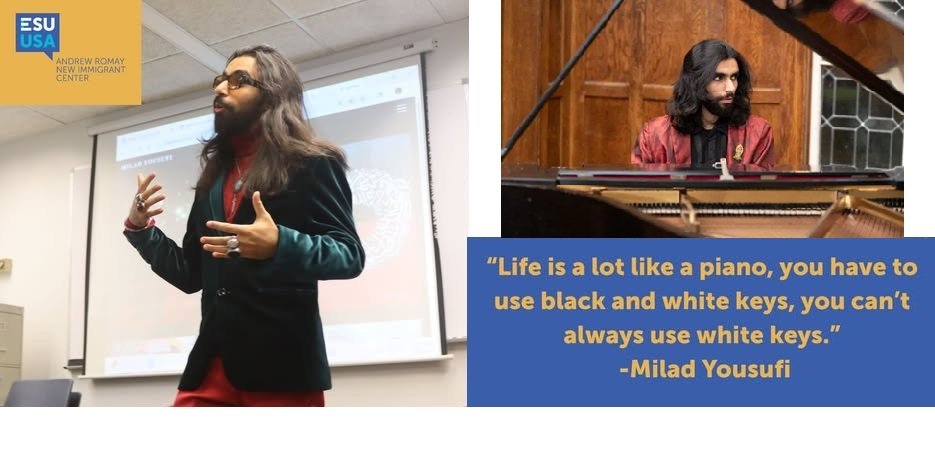
SVITLANA H.
“All the greatest times in my life have always been coupled with the saddest times.”
Milad’s words resonate deeply with me, as I am experiencing something similar. Like Milad, I live abroad: I am safe, while terrible things are happening in my homeland. Although I haven’t achieved the same level of success as Milad, I am safe. I now live in a wonderful country — a place I even couldn’t dream. In many ways, this is the best period of my life. Yet, in the same time, it is the saddest period too.
I suffer deeply over the catastrophe in my war-torn homeland. The war has taken loved ones from me; I cannot visit my home, and I do not know what will happen.
A golden cage
I interpret Milad’s remark about the “golden cage” as the inability to share the joy of his achievements with his loved ones, especially with his mother.
He is cut off from his home country, it’s wonderful places, from meeting friends, and from the chance to hug those closest to him. He feels abandoned by his homeland and misses it. This isolation from his past and his native land acts like a cage, preventing him from feeling like a free man.

ART
What personal connection do you have to music?
I love music, but I’m not a musician. I usually listen to music when I’m commuting or when I have mood for that. I listen different kind of music, it can be pop, classical, jazz, or another type.
I feel more connected to another art, which is visual art. In the movie, the moment when they were digging a piano out of the ground touched me a lot. For me, it was not just about digging out a piano. It looked like an art performance. They were bringing civilization back to the world, to there country. It felt like art was coming back, civilization was coming back, and people were becoming free again.
The little boy was the first person who touched the piano keys. For me, It looked like a new generation in this country would live in freedom, with art again. This moment was very emotional for me because it showed how art can represent freedom, hope, and a new beginning.
No matter how blessed human beings are, they will always ask for more.
I think this is true. There is a famous Russian fairy tale called “The Golden Fish.” It was also very popular in my childhood in Kazakhstan. The story is about an old fisherman who catches a magical golden fish that can speak and promises to make his wishes come true. His wife first asks for a new washing tub, then a better house, and later more and more expensive things. But she is never satisfied and always wants more. End of story she wants become the ruler of the sea and serve her personally and do all of her wishes. That final wish was last. The golden fish said nothing, turned and swam away into the sea. Old woman left with nothing and everything she had was taking away.
I think this story shows that people sometimes forget to appreciate what they already have because they always want something more.
ROBERT
No matter how blessed human beings are, they will always ask for more.
In my country, there is a common saying: “You don’t know what you’ve got till it’s gone.” Often, it is only after losing comfort, necessities, or physical health that we truly appreciate what we had. Milad’s perspective highlights how people frequently take abundance for granted, while those who have endured hardship remain deeply grateful for simple blessings.
I strongly relate to Milad’s longing to see his mother, as I have not seen my own mother in ten years. Additionally, after spending 20 months undergoing hospitalizations and surgeries, I learned to be deeply grateful simply for my ability to walk — a capability that many take for granted. As my grandmother taught me, life is unpredictable, and we must make the best of the circumstances we are given.
Did the film make you cry?
Milad’s story resonated with me on a deeply personal level. Like many immigrants who were forced to flee their homelands and seek asylum, I had to abandon my family, suffer imprisonment and persecution for my political opinions, and survive a dangerous journey through the jungle in South and Central America to reach safety.
After entering the United States legally, I hoped for stability, but I now face the ongoing threat of deportation. Hearing Milad describe waiting ten years to see his mother while navigating the complex immigration system to be deported or sent to a third country mirrors my own experiences, evoking a complex mixture of grief, cry, scream, and anger.
KAORI
What personal connection do you have to music?
Since I started playing the piano when I was 4 years old, music has always been a big part of my life. Music means a lot to me because it’s such a beautiful universal language. I can connect to a lot of people through music by playing with choir groups, chamber musicians and my family. Milad said that his family life was filled with music and he missed his life in Afghanistan. I understand how he feels because I left my children in California when I moved to NY and can’t play with them as often as I used to. I try to do my best connecting to new people through music and build a new life in NY.
Milad’s website 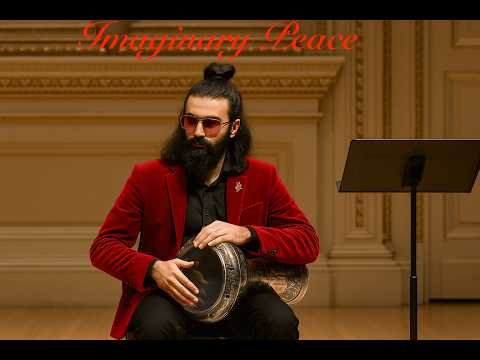
I listened to “Farewell Kabul” and “Poem for my mother” on that website. Milad expresses his sadness and inner anger through his music. He uses Arabic scales that he grew up hearing and singing with his family in his hometown. In the middle sections, the music becomes more intense and emotional. He also uses some major chords to express his hope of returning home and seeing his mother again.
DENISE
No matter how blessed human beings are, they will always ask for more.
Yes, I think this is often true. People naturally want to improve their lives and have better things. However, sometimes we become so focused on what we don’t have, that we forget to appreciate what we already have.
When I see news reports about people traveling across the mountains, crossing dangerous jungles with their families, and risking their lives to reach the United States, I often wonder what they have been through and what has given them the courage to keep going.
Many are searching for something that others might take for granted: safety, freedom, or simply the chance to live without fear.
Coming from a country where I have been fortunate enough to enjoy peace and security, it is difficult for me to fully imagine the hardships that have led people to leave their homes behind. Everyone has a different story, and some journeys are far more difficult than I can imagine.
Milad’s story reminds me that what feels ordinary to one person may be a dream for another. Sometimes, we spend so much time wishing for a better life that we forget how precious the life we already have can be. I think it is important to keep pursuing our dreams, but also to remain grateful for what we have and compassionate toward those whose journeys have been very different from our own.
“All the greatest times in my life have always been coupled with the saddest times.”
Yes, I can really relate to this statement because I have experienced a time when happiness and sadness existed together. During the COVID-19 pandemic, my father became critically ill and was hospitalized. I rushed back to Taiwan from Vietnam to see him when my brother called me.
However, because of the government’s COVID-19 restrictions, I was supposed to stay in a quarantine hotel for two weeks before I could visit him. I was afraid that I might not get the chance to see my father one last time.
Fortunately, the policy allowed some flexibility in special circumstances, I only need to pay for the PCR test myself in every 2 days during the quarantine period. After taking a PCR test and getting a negative result, I was allowed to visit my father under special arrangements. This meant that I could spend one hour with him every day during the final days of his life.
I felt incredibly grateful that I could be there with him, but at the same time, I was heartbroken because I knew that every day I saw him meant one less day I had left with him. Every visit was precious, but also emotionally overwhelming.
This experience taught me that happiness and sadness can exist at the same time. I was thankful for every moment I could spend with my father, even though I knew I was slowly losing him. Like Milad, I learned that some of the most meaningful moments in life can also be the most painful ones.
NAIRA
“All the greatest times in my life have always been coupled with the saddest times.”
Milad’s story made me realize that we can have good things in life and still miss what we left behind. We can be thankful for new opportunities and still miss the people we love and the places that are part of our lives.
Did the film make you cry?
Yes, the film made me emotional because Milad had to leave his family and his country to have a better future. It was sad to see how much he suffered, even when he was trying to follow his dreams. His story touched me because he lost so much, but he never gave up. It made me think about how life can be difficult, but we still need to have hope and keep going.
TATIANA
No matter how blessed human beings are, they will always ask for more.
Yes, this is generally true, and Milad provides a clear example from his own experience. While at a luxurious music camp in East Hampton, surrounded by talented musicians and staying in a beautiful place, his friends complained about the Wi-Fi speed. For Milad, who grew up in Afghanistan without reliable electricity, having 24/7 electricity was a massive blessing. His perspective highlights how easily people adapt to their circumstances and begin to take basic comforts for granted, always wanting the next best thing.
Examples from life: This is a common human trait. Someone might get a promotion at work, but instead of being satisfied, they immediately start worrying about getting the next promotion or a higher salary.
A golden cage
In this metaphor, Milad is the bird, and New York City (or his life in America) is the “golden cage.” The cage is “golden” because it represents safety, immense opportunity, a world-class education, and a successful musical career — all the beautiful things America has given him.
However, “it is still a cage” because he feels trapped and imprisoned by his circumstances. He cannot return home to Afghanistan due to the danger and destruction there, and he is haunted by the loss of his friends and family. Despite his material and professional success, he is confined by his refugee status and the trauma of his past.
The golden cage symbolizes how even a life filled with privilege and safety can feel like a prison when you are forcibly separated from your roots, your loved ones, and your homeland.
OLEKSANDRA
No matter how blessed human beings are, they will always ask for more.
In my opinion, people only think that way when things are going well. In my experience, when a situation becomes truly critical, most people actually find joy in very simple things — like drinking water, and a hot meal.
A golden cage
I suppose, Milad said this based on his own experience. It seems he studied at an excellent college and now building a wonderful career as a musician and composer here in the U.S. His story is truly a success. However, he still hasn’t been able to reunite with his mother, he missed his father’s funeral, he can’t even visit his homeland.
NADEZHDA P.
What personal connection do you have to music?
When I was child, I really wanted to study music, but we were very poor and couldn’t buy an instrument. I really wanted to learn to play the piano, but the music school only accepted students who already owned an instrument. My older sister played the violin, and my parents would tell me, “Go learn the violin,” but I didn’t want to learn on violin. I wanted to play the piano!! So, in the end, I never learned!
Now that I’m an adult, I love listening to music; it calms me. I enjoy lyrical music and the sound of the violin, saxophone. Whether I’m feeling upset or happy, I always listen to music.
I love listening to songs performed by Bono, Queen and the Scorpions, as well as other bands. For example: “Metallica” is an American heavy metal band. “The Unforgiven”, “Nothing Else Matters”. Lately, I’ve been often listening to the song “Make it spectacular” and “Don’t close the book”/“The Next Page”
No matter how blessed human beings are, they will always ask for more.
Yes, people want more; I agree with that statement. Let’s start with the fact that the more money a person has, the more they want; the more power they have, the more of it they crave. They likely cannot simply stop at what they already possess. Perhaps I behave the same way myself: first, we finish school and want to get into university. We get in, and then—perhaps—we want a good career, so we secure one. Next, we want an ever-increasing salary and to be in greater demand. Then comes a promotion… And so on. Most people — perhaps not everyone, but most people DO want something more. That’s my opinion. We want more….
KIRILL
What personal connection do you have to music?
I used to listen to all kinds of music, but I also understand that it can be very emotionally draining. Just today I deleted all the music from my phone so I could focus on the important things. I believe different music can evoke different emotions. We are responsible for what we listen to, and we should understand that our playlist shapes our mood, and our mood shapes our life.
For example, even though I’ve stopped listening to music, I’ll always keep jazz, because it genuinely relaxes me and also helps with digesting food. I read that in a magazine 🤓👆 I’d also add that the more primitive the music, the easier it is to understand and absorb, unlike the complex works of classical music.
“All the greatest times in my life have always been coupled with the saddest times.”
Often, yes, that’s how it is. Through contrast we see situations more intensely, as they say, “the darkest hour is just before the dawn.”
I always follow the principle of not labeling moments as positive or negative. I think black-and-white, categorical thinking isn’t very mature. Without one, there can’t be the other, and in the end we understand that everything is connected. As the saying goes, “every cloud has a silver lining.”
You should always believe in the best, but prepare for the worst.
MAIIA
A golden cage
That expression represents a comfortable life without complete freedom. In America, Milad is safe and has opportunities to study, work, and make music, but he cannot safely return to Afghanistan, and he is separated from his family. He feels like a bird in a golden cage because staying away from home is a necessity, not a free choice. He has many good things in his life, but he cannot go where he wants to be.
Milad’s website
From his website, I learned that he is not only a pianist but also a composer, conductor, painter, and poet. He became the first Afghan conductor of the Afghan Youth Orchestra and arranged music for its performances. He also wrote the music for Paper Piano, the episode about his own life. In 2024, he won an Emmy for his music for The Night Doctrine. I think his story shows how much a person can achieve despite great difficulties.
EVILA
A golden cage
After all the difficulties he went through, America was his salvation. The country gave him the opportunity to achieve his dream career and live a quiet and safe life, but his spiritual side is not fulfilled – because the most important thing is family. He is not with them, with the people of his heart, and in the place where he grew up with the most beautiful memories of his family and friends, his culture, and everything his country has. It is very painful when you cannot become who you are today in your own country. Material wealth catches the eye, dresses you nicely, and sounds good, but love fills the soul, which is the most important thing without which you cannot truly live.
Did the film make you cry?
Yes, the film made me cry and laugh all at the same time. By nature, I am very emotional, and the moment I read that this is a true story, I get even more involved with the roles. But while watching the film when Milad was talking to his family members, it made me cry even more because of the longing I also have for my parents, sisters, and my brother.
Unlike Milad, my family members can come to visit me, but they cannot stay here all the time. However, I would love for my children to grow up with their grandparents, because grandparents are love itself, and I know how much they love their grandchildren too. I am lucky to have grown up with my grandmother.
MADELAINE
What personal connection do you have with music – either as a musician or a listener?
Music has always been a big part of my life. My grandfather played musical instruments in the Peruvian Navy, and some of my uncles had their own bands and were singers, so music has been part of my family for generations.
My parents also introduced me to a lot of great music from a very young age, especially rock from the 80s, including American and British bands like The Beatles, The Police, the Bee Gees, The Cure, and Queen. Because of them, I grew up listening to a wide variety of music.
I also loved my music classes in middle and high school, where I learned to play traditional Peruvian instruments like the cajón and the zampoña. When I was younger, I really enjoyed singing and going to karaoke with friends.
During the pandemic, I bought a keyboard and started learning the basics of playing the piano. I’m not a professional musician, but I enjoy having that personal connection with music, both as a listener and as someone who has tried playing instruments myself.
“All the greatest times in my life have always been coupled with the saddest times.”
I think he means that even if something looks beautiful, it doesn’t mean you’re truly happy or free. A bird might have a beautiful golden cage, but it still can’t fly wherever it wants. I think it’s similar to people. Sometimes you can have a good life and everything might look fine, but you can still feel trapped in a situation. For me, the important thing is being free to make your own decisions and live the way you want.
YESENIA
What personal connection do you have to music?
I have a personal connection with music because I’m an artist, and music has been part of my life for as long as I can remember. When I was a child, I tried playing the piano, and I also played the castanets, drums, and flute.
After finishing school, I studied performing arts in college, where I learned how music connects with theatre. I explored how to analyze music and combine it with different scenes in a play to create emotions, atmospheres, and meaning.
As an artist, I see music as much more than sound. It is a way to express emotions, tell stories, and connect with people. Honestly, I can’t imagine a world without music.
No matter how blessed human beings are, they will always ask for more.
I think human beings have always had a desire for power. We are never fully satisfied with what the universe gives us, and maybe this is part of human nature. From an early age, we grow up with the idea that we need to become successful, achieve more, and constantly improve our lives. Today, this pressure has become even stronger because of social media.
We are constantly comparing ourselves to others, looking at what they have, and wanting more and more. But sometimes, we never stop for a moment to appreciate all the blessings we already have in our lives.
We forget to be grateful for the simple things: water, food, a place to sleep, the people around us, and even the small, beautiful moments that happen every day. I think we spend so much time thinking about the future, planning what we want to achieve, and worrying about what we don’t have that we forget to live in the present.
And the truth is that, in the present moment, God and the universe are already giving us many of the things we need, and sometimes even much more than we realize.
Maybe happiness is not always about having more, but about learning to appreciate what we already have. 
OLEG
What personal connection do you have to music?
When I was a child, I loved to draw. My parents sent me to an art school. But instead of drawing, we did many different things. I even played on spoons. I did not like it, so I left the school quickly.
Did the film make you cry?
The film did not make me cry. I never cry. I do not show my weakness.
OLGA
What personal connection do you have to music?
I like music. Sometimes, music inspires me, sometimes it makes me sad. It depends on my mood and the kind of music. My personal connection as a listener, definitely. I can’t consider myself a musician, if only because I don’t write a piece.
But I have a musician education. I graduated from musical school. I had piano’s class and I studied for 7 years.
A golden cage
Each person has to make their own choice. Milad’s choice is to stay in the United States. He became successful in the USA and I think it was lucky for him. He can come back to his country anytime, but his choice is to create music here. And in my opinion this is a golden cage with golden eggs and maybe he needs to appreciate God for this.
ANTONIA
No matter how blessed human beings are, they will always ask for more.
Yes, it’s true. From an evolutionary point of view, people are programmed to never be completely satisfied.
In ancient times, our ancestors lived in a very dangerous world. If a person was satisfied with the food and housing he had, they stopped looking for more. They weren’t looking for more food or better protection. Nevertheless, the people who always wanted “more” were the ones who survived. They collected additional food, built stronger shelters and planned for the winter.
This means that the desire for more is a tool for survival. Today we don’t have to fight for survival every day, but our brain still works the same way. No matter how many blessings we have, our nature pushes us to look for more. Thus, it affects my own life. I’m also always not satisfied with what I have.